
When Political Guarantees Meet Market Reality
President Trump told oil executives they'd have total safety investing in Venezuela. ExxonMobil's CEO had a different assessment.
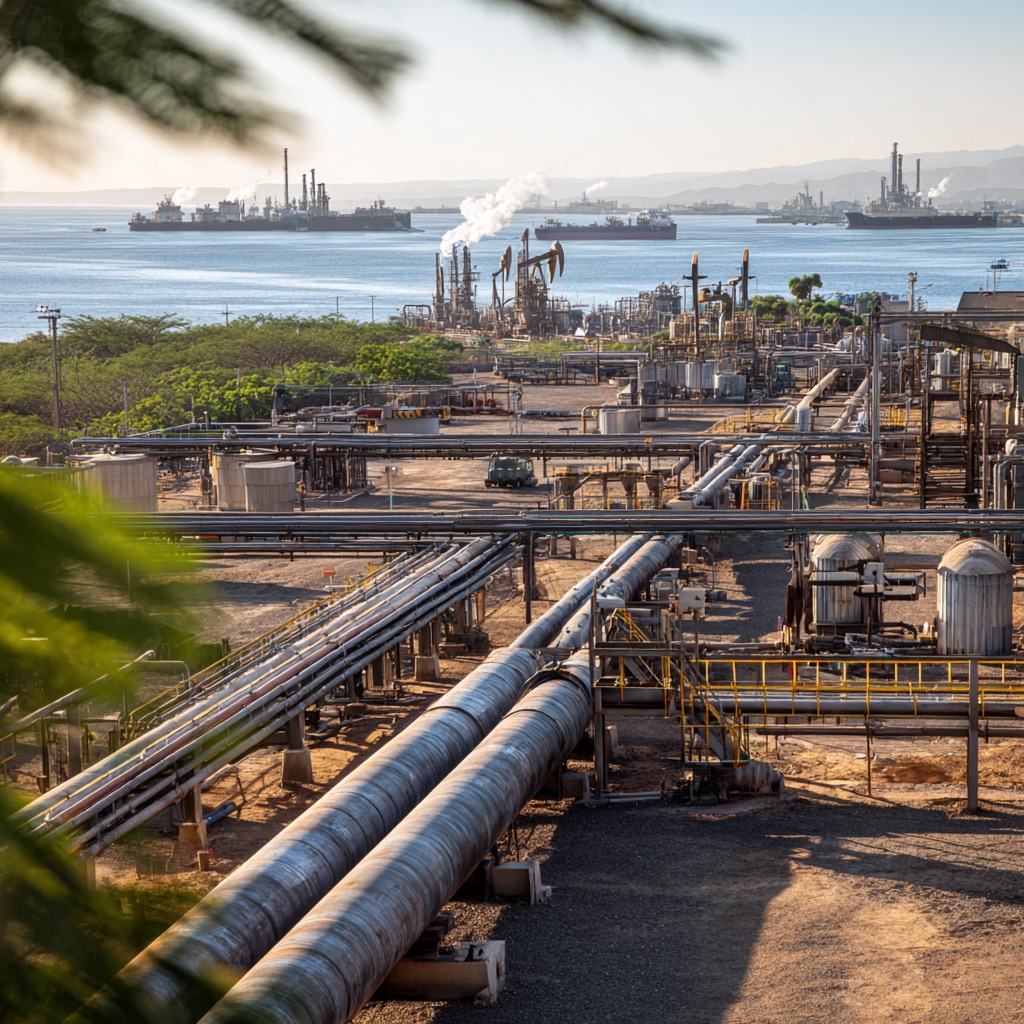
President Trump told oil executives they'd have "total safety" investing in Venezuela. He promised $100 billion in reconstruction opportunities. He offered direct U.S. government backing.
ExxonMobil CEO Darren Woods had a different assessment: "If we look at the legal and commercial constructs and frameworks in place today in Venezuela today, it's uninvestable."
The gap between those two statements reveals something fundamental about how institutional capital actually gets deployed in high-risk jurisdictions.
Key Takeaways:
Bankability Requires Structure: Political promises don't override investment criteria. Bankable projects need legal enforceability, defined cash flows, and security mechanisms that outlast political cycles.
The $10B Arbitration Overhang: Venezuela owes billions in unpaid arbitration awards to ConocoPhillips and ExxonMobil, proving that even winning legal cases doesn't guarantee enforcement.
Chevron's Different Calculus: Existing operators with sunk costs and established infrastructure evaluate incremental investment differently than greenfield deployment.
Capital Market Bifurcation: Supermajors are concentrating in stable jurisdictions while high-risk markets become reliant on national oil companies, Chinese capital, or smaller independents.
Multi-Decade Reconstruction Timeline: Rystad Energy estimates doubling Venezuela's production would cost $110B and take until 2030, requiring structural protections no single administration can guarantee.
Political promises don't override investment criteria. They signal direction, but they don't create the structural protections that project finance requires.
What Makes Something Bankable
A bankable contract needs three elements that project finance teams can model and price.
Legal enforceability in a recognized jurisdiction. The contract must be governed by international arbitration clauses (ICSID, ICC, or similar) or by a legal system with established precedent. In Venezuela's case, you'd need contracts explicitly governed by New York or English law with arbitration outside Venezuelan courts. Without that, there's no mechanism to enforce terms when disputes arise.
Defined cash flow mechanics with clear payment priority. Project finance depends on predictable revenue streams that service debt. That means defined offtake agreements, transparent pricing mechanisms tied to international benchmarks, and direct payment structures that bypass sovereign intermediaries where possible.
If every dollar flows through PDVSA or a state entity with discretionary control, you can't secure financing. Lenders need to see how cash gets from the wellhead to their account without political interference.
Security that outlasts political cycles. This could be offshore escrow accounts, revenue held in U.S. or European banks, or physical collateral like export contracts with creditworthy counterparties. The structure has to assume the current government's promises might not bind the next one.
Venezuela offers none of this. The hydrocarbon law hasn't been reformed to allow these structures. There's no clarity on whether contracts can be governed externally. The payment infrastructure still runs through state entities with a history of non-payment.
A political guarantee doesn't create these mechanics. Legal reform does.
The Arbitration Overhang
Venezuela owes approximately $10 billion to ConocoPhillips across multiple arbitration awards. ExxonMobil has similar outstanding claims. These aren't theoretical risks—they're demonstrated behavior.
When a government has billions in unpaid arbitration awards, it's evidence that the legal mechanisms international investors rely on have already failed. ExxonMobil and ConocoPhillips won their cases in recognized tribunals, got enforceable judgments, and still haven't been paid.
That tells new investors something specific: even if you structure contracts perfectly, even if you win disputes, enforcement remains uncertain.
The legal entanglement goes deeper. New investors face the risk that their assets or revenues could be attached to satisfy existing claims. If you invest in Venezuelan oil infrastructure and export crude, creditors holding those arbitration awards can potentially seek to attach your shipments or revenues in international jurisdictions.
There's precedent for this. Creditors have successfully seized Venezuelan oil cargoes and PDVSA assets in Caribbean ports and European jurisdictions to collect on unpaid awards.
Your new investment becomes collateral for someone else's old claim. Even if you have no legal relationship to the prior nationalized assets, operating in the same sector under the same sovereign creates exposure.
Project finance lenders will model this risk. It significantly increases the cost of capital, if they'll provide financing at all.
Why Chevron Sees It Differently
Chevron has an existing operational footprint in Venezuela. They never fully exited like ExxonMobil did.
That changes the calculation entirely. They already have sunk costs, established infrastructure, and relationships with PDVSA. For them, incremental investment to restore production from existing assets has a different risk profile than greenfield deployment.
They're not starting from zero. They're deciding whether to put more capital into operations they already manage. The downside is capped by what they've already committed. The upside is getting those assets back to productivity.
Chevron Vice Chairman Mark Nelson said the company can increase production by about 50% "just in the next 18 to 24 months" within disciplined investment schemes.
Smaller independents operate with a different model altogether. They typically have lower cost structures, higher risk tolerance built into their return expectations, and more flexible decision-making processes.
A supermajor needs board approval for billion-dollar commitments with institutional-grade risk frameworks. An independent might deploy $50-200 million with faster approvals and higher return hurdles that compensate for political risk.
More importantly, smaller players often pursue different strategies: service contracts rather than equity ownership, shorter-duration agreements, or technical partnerships that limit capital exposure while capturing upside through fees or production-sharing with faster payback periods.
They're not trying to build 30-year infrastructure projects. They're looking for 3-5 year opportunities to extract value and exit.
Neither Chevron nor the independents are saying Venezuela is low-risk. They're saying the risk-return profile works for their specific circumstances: existing presence, different capital structures, or lack of better alternatives.
That's not validation of the investment thesis Trump is proposing. It's opportunistic capital with different constraints.
The Broader Pattern
We're seeing a fundamental bifurcation in who can deploy capital where. It's creating a two-tier system based on risk absorption capacity.
The supermajors are increasingly concentrating in jurisdictions with established legal frameworks: U.S. shale, North Sea, Australia, parts of the Middle East with long-standing contractual stability. They can afford to be selective because they have access to lower-risk opportunities that still meet their return thresholds.
Their cost of capital, regulatory requirements, and shareholder expectations push them toward jurisdictions where political risk is minimal or at least quantifiable through insurance and legal structures.
Meanwhile, emerging markets with institutional weakness are increasingly reliant on either national oil companies, Chinese state-backed investment, or smaller independents willing to accept higher risk for higher returns.
Political risk used to be something you could price and manage through insurance, contract structures, or diversification. Now, the gap between high-risk and low-risk jurisdictions has widened to the point where many institutional investors simply won't cross the threshold regardless of returns.
The risk isn't just higher. It's become less modelable because the mechanisms that used to provide protection (like international arbitration) have proven less effective when governments choose not to comply.
When a jurisdiction can't offer bankable contract structures, it doesn't just pay a higher cost of capital. It loses access to entire categories of investors.
The capital that does come in is either opportunistic with short time horizons, or geopolitically motivated rather than commercially driven.
What This Means
Countries that need investment most to develop their resources are the ones least able to attract institutional capital. They either remain underdeveloped or become dependent on non-commercial capital sources with their own strategic agendas.
Venezuela's situation is the most visible manifestation of a broader recalibration in how energy capital flows globally.
Trump's guarantee is a political signal. It indicates U.S. government support for investment in Venezuela. But it doesn't create the legal frameworks, payment structures, or arbitration mechanisms that would make the opportunity bankable by institutional standards.
ExxonMobil's CEO said it clearly: show me the reformed legal code, show me how disputes get resolved, show me how capital gets repatriated. Then we can talk about deploying billions.
Political assurances are directional signals, not investment-grade protections.
The reconstruction timeline tells the story. Rystad Energy estimates that doubling Venezuela's current oil production would take until 2030 and cost about $110 billion. Tripling back to 2000 levels would take well over a decade and cost closer to $185 billion.
That's not a four-year project horizon. It's a multi-decade commitment that requires structural protections no single administration can credibly guarantee.
The market is segmenting based on who can absorb what level of institutional risk. Supermajors are concentrating in lower-risk jurisdictions. Smaller players and geopolitically motivated capital are filling the gap in higher-risk markets.
Venezuela becomes investable when you have fewer options, not when the fundamentals improve.
That's the reality institutional investors are pricing. Political promises don't change it.
Educational purposes only. Nothing here is legal, financial, or investment advice. Any offer is made solely through an issuer's own offering documents.