
The New Solo Founder: When It Is Time to Raise Your Seed Round
AI lets one founder build what a seed round used to fund. The test, the signals it is time to raise, the signals it is too early, and what investors want from a team of one.

You built the whole company alone, and now everyone keeps asking when you will raise. That question deserves a better answer than the one founders got in 2015.
What still surprises me is how far one person gets before they need anyone's money. In 2015 a founder needed a seed round to hire the five people who would build the first version: two engineers, a designer, a salesperson and someone on operations. That seed round bought headcount, plain and simple.
Today I meet founders who built the product, the website and the onboarding alone. They added the support desk and the first marketing engine on top of that, with AI agents doing the work those five hires used to do. These founders have paying customers before they have a cap table.
Key takeaways
- AI has produced a new class of entrepreneur: one founder, a swarm of agents, paying customers before a cap table.
- The seed round no longer buys headcount. It buys distribution and time.
- Finish one sentence before you raise: what will this money get me in eighteen months that I cannot get without it?
- Raise later, smaller and against revenue, and keep the equity you would have sold early.
- Investors in a team of one are buying the founder's judgment, customers and record, so the founder runs the raise.
A new class of entrepreneur
Mark Cuban said in an a16z interview this week that there has never been a better time to be an entrepreneur. He described one person in a basement running a swarm of agents as an entire business, and he said there will be two kinds of companies going forward: the ones great at AI and the ones out of business.
Ken Griffin of Citadel called this a "golden era for entrepreneurs." He described business owners watching their competitive moats get filled in as AI lets small teams challenge incumbents.
When the founder of Citadel and Mark Cuban say the same thing in the same month, that is a shift, and I treat it as one. This new class of entrepreneur waits for nothing: no permission, no co-founder search and no check before the first line of code.

The seed round changed jobs
If one person can reach paying customers alone, the seed round stops being a starting gun. It becomes a tool for a specific job.
The round used to buy headcount, and now it buys distribution and time. Distribution means the sales motion one person cannot run alone, the channel partners, and the compliance layer bigger customers need before they sign. Time means you stop answering support tickets at midnight and start doing the deals only you can do.
This also changes the shape of the round. The AI-native founder often needs a smaller seed than the 2015 founder, raised later and at a better valuation, because the raise sits on top of revenue instead of a slide.
The finish-this-sentence test
Here is the test I give every founder who asks me about timing. Finish this sentence: "If I raise this money, in eighteen months I will have what I cannot get without it."
If your honest answer is the same business with more people, you are too early. If your answer is a distribution channel, a regulated market or a second product line that one person physically cannot run, it is time.
Signals it is time to raise
- Customers pay and come back without being chased.
- You can name the one thing the money buys that you cannot get without it.
- Demand is outrunning what you and your agents can physically serve.
- A regulated or enterprise door is open, and it needs a trust layer you cannot build alone.
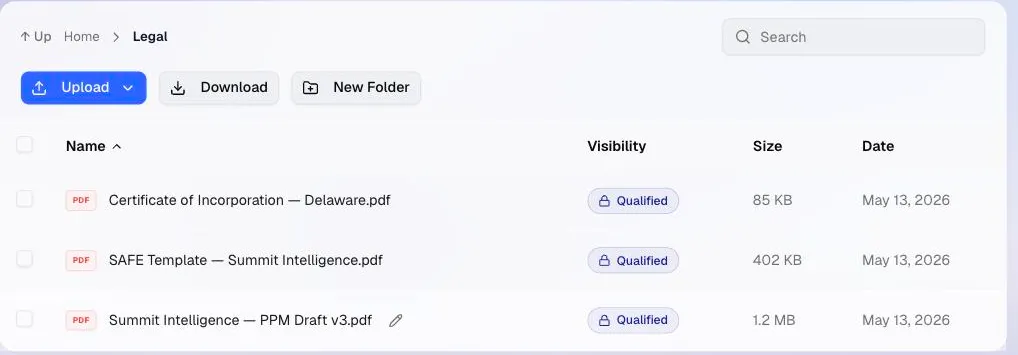
- Your records are clean: the entity, the cap table, the IP assignments and the numbers all tie out.
Signals it is too early
- You are raising to find out whether anyone wants the product.
- The money would buy more of the same business.
- You cannot answer this question: if an investor says yes tonight, can they wire tomorrow?
- You are raising because a friend just did.
That last one is quietly common and rarely admitted. A lot of founders still believe a term sheet is the proof that the business is real, so they raise to feel legitimate while the business runs fine without the money. The old playbook taught them the round is the milestone, and the old playbook is wrong about that now.
There is fear underneath it too. The founder worries that a funded competitor will out-build them, and with AI that fear runs backwards most of the time. The competitor with ten engineers is out-spending a sharp founder who runs a swarm of agents, and the extra spend no longer buys a faster product. Cuban framed the hardest part as simply going for it, and I agree with him.
Every month you grow revenue on your own is a month you keep equity instead of selling it at a discount. The discomfort of building longer without a check is the price of owning more of your company when you finally raise, and that trade favors you more than it ever has.

Where defensibility actually lives now
Griffin's point about moats matters here. If anyone can build the software, the software stops being the moat. For the solo founder, defensibility lives in three places.
The customer relationship. A founder who personally knows the first two hundred customers, answers their emails and ships what they ask for within a week holds something a funded team with an account manager cannot copy.
Proprietary data and workflow. The context your agents learn inside your business belongs to you alone, and it compounds every week you run.
Trust and compliance. The licenses, the verified records and the audit trail take real time to build. AI collapsed the cost of building software, and the cost of trust stayed exactly where it was.

One warning on the first moat. Founders lose it the day they hire someone to be the founder for them, usually right after the round, when a layer goes in between them and the customer to make room for investor work. It feels like progress at the time, which is why so few see it coming.
What investors want from a team of one
Investors underwriting a solo founder want three things, and all three are within your control.
Proof the customers are real. Revenue that recurs, references who answer the phone and churn you can explain in one sentence.
Proof you can recruit when the time comes. This sounds like a contradiction for someone who built alone on purpose, and it is less of one than it sounds. You prove it by showing who already works with you without a salary: the contractors who keep coming back, the advisors who answer the phone, the customers who send referrals and the partner who integrated without being paid. That is a team, it just sits off the payroll.
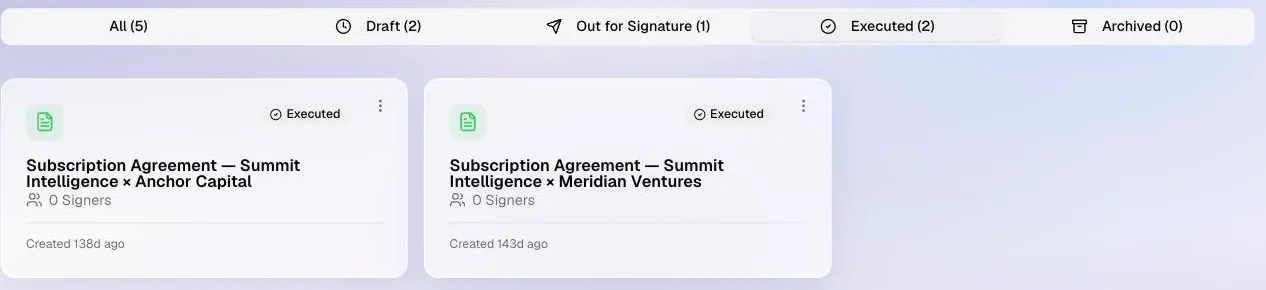
A raise run with the discipline of a business. Documents ready, accreditation handled if the raise is public, one link for everything and the founder in the room. A founder who gets a lawyer, an accountant, early customers and serious investors moving on one timeline is demonstrating the exact skill the investor worries about.
Run your own raise
The investor in a team of one is buying your judgment, your customer base and your record. They want to look the person who holds those relationships in the eye, and a middleman standing in that room blocks the exact thing the investor came to evaluate.
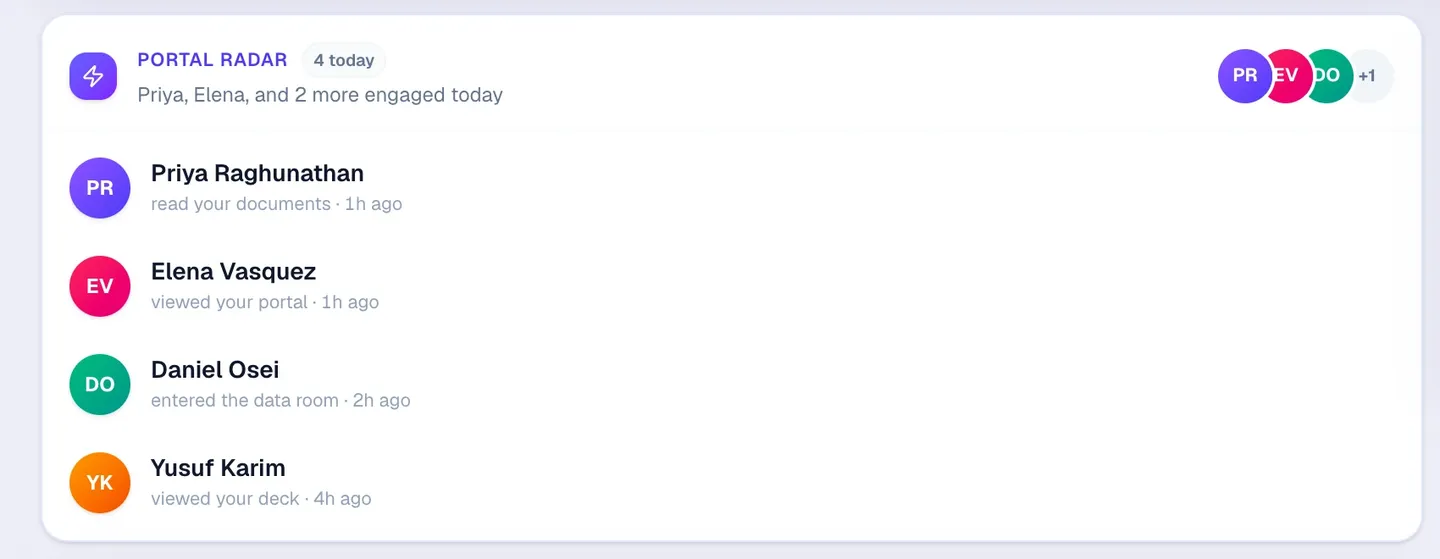
So run the raise yourself, like the business you already run. We built Deal Box around that moment. We prepare the raise and host it behind one branded portal link that handles the deck, the documents, investor verification and signatures, so you stay focused on the conversations that matter. We are paid only by the company and never take a cut of the raise.
The variable that never moved
We have worked with more than a hundred companies since 2016. The tools changed completely across those years, the cost of building collapsed, and the founder now fits in one chair.
What separates the ones who make it has stayed in the same place the entire time. They take ownership of the outcome, and they wait for no agent, no platform, no co-founder and no check to make the business real. Cuban calls it going for it. I call it taking destiny into your own hands, and the person who does that today has more leverage than at any point in my career.
A new class of entrepreneur is about to walk into private markets with real revenue, a small cap table and no patience for the old way of raising. Our job is to make sure that when they arrive, the raise is as clean as the business they built.
If that founder is you, start with the test above and write the eighteen-month sentence down. When you can finish it honestly, get your records in order and come talk to us.
Book a demo of the Deal Box investor portal
FAQ
When should a solo founder raise a seed round?
When the money buys something one person cannot do: a distribution channel, a regulated or enterprise market, or a second product line. If the money would only buy the same business with more people, it is too early.
What are the signs it is too early to raise?
You are raising to find out whether anyone wants the product, the money would buy more of the same, you could not close an investor who said yes tonight, or you are raising because a friend just did.
How has AI changed the seed round?
AI lets one founder build the product and reach paying customers without the first five hires a seed round used to fund. The seed round now buys distribution and time, and it is often smaller, later and raised against revenue.
What do investors want from a solo founder?
Proof the customers are real, proof the founder can recruit when the time comes, and a raise run with the discipline of a business.
Should a solo founder hire someone to raise for them?
Investors in a team of one are betting on the founder's judgment and relationships, so the founder should be in the room. Deal Box prepares and hosts the raise, is paid only by the company and takes no cut of the raise.
This article is for general information only and is not legal, tax or investment advice, and it is not an offer to sell or a solicitation of an offer to buy any security. Deal Box is not a registered broker-dealer or investment adviser. Consult your own counsel before conducting any securities offering.
Educational purposes only. Nothing here is legal, financial, or investment advice. Any offer is made solely through an issuer's own offering documents.